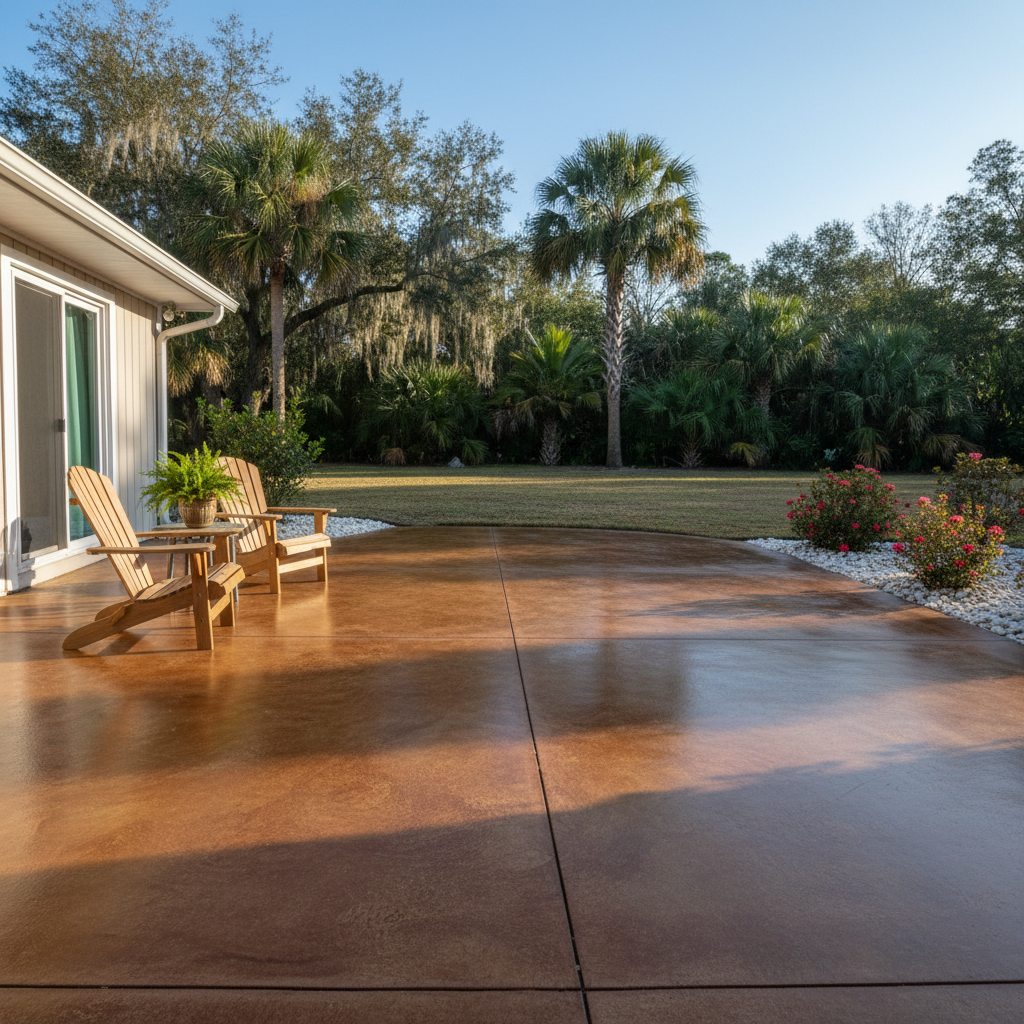
You love your stained concrete, right? It adds character, looks sharp, and frankly, it's a lot easier to clean than carpet or grout. But just like anything else, it needs a little TLC to keep it looking its best, especially here in Tallahassee where the sun beats down and the humidity is relentless. I've seen a lot of stained concrete over the years, both good and bad, and I can tell you that a little maintenance goes a long way.
Making Your Stained Concrete Last Longer
The biggest thing that affects how long your stained concrete holds up is the sealer. Think of it like sunscreen for your concrete. Without it, the sun's UV rays will fade the color, and moisture will find its way in, causing all sorts of headaches. For outdoor surfaces like patios or pool decks, you're going to want to put on a good quality sealer every 1-3 years. Indoors, it can last much longer, maybe 5-10 years, depending on foot traffic and how well it was sealed initially. Don't skip this step. It's the single most important thing you can do.
When you're putting on new sealer, make sure the surface is super clean and dry. Any dirt or moisture trapped underneath will cause problems later on, trust me. I always recommend using a sealer that's specifically made for stained concrete and gives good UV protection. There are different types – acrylics, epoxies, urethanes – and each has its own good points and bad points. If you're not sure which one to use, give us a call at Concrete Limitless; we can point you in the right direction.
Keeping It Clean: What You Need to Do
For indoor stained concrete, keeping it clean is pretty simple. Sweep or vacuum regularly to get rid of dirt and grit. That stuff acts like sandpaper, slowly scratching away at your sealer. For cleaning, a damp mop with a pH-neutral cleaner is usually all you need. Stay away from harsh chemicals, ammonia, bleach, or anything abrasive. Those will strip your sealer and dull the finish faster than you can say 'oops.'
Outdoor stained concrete needs a bit more attention. Our famous Tallahassee rain can bring in a lot of dirt, pollen, and organic matter. I recommend sweeping or blowing off your patio or driveway regularly. When it needs a deeper clean, a pressure washer on a low setting (no more than 1200-1500 PSI) with a fan tip can work wonders. Just be careful not to hold it too close or blast away at one spot, or you could damage the sealer. Again, use a pH-neutral cleaner if you need one, and rinse thoroughly. Don't let puddles sit for too long, especially in shaded areas, as that can encourage mildew growth, which is a common problem here in our humid climate, especially on the north side of houses that don't get much sun.
Warning Signs You Can't Ignore
Keep an eye out for these things:
- Dullness or Fading: If your concrete is starting to lose its shine or the color isn't as vibrant as it used to be, that's a clear sign your sealer is breaking down and needs reapplication.
- Peeling or Flaking: This usually means the sealer wasn't put on correctly, or it's just old and failing. You'll see bits of the top layer coming off.
- Water Penetration: If water isn't beading up on the surface anymore, but soaking in, your concrete is exposed. This is a big one, especially outdoors, because moisture can lead to efflorescence (those white powdery deposits) or even freeze-thaw damage in the rare event we get a hard freeze.
- Cracks: Small hairline cracks can happen, but if you see them getting wider or longer, or if you notice any unevenness, that could be a structural issue.
- Stains that won't come out: If you've got a stain that's penetrated the sealer, it's a sign the protection isn't doing its job anymore.
When to Call a Professional
Look, a lot of this maintenance you can handle yourself. But there are times when it's best to bring in the pros. If you're seeing widespread peeling or flaking, significant fading, or deep-seated stains that you can't budge, you might need a full strip and re-seal. That's a more involved process that requires specific chemicals and equipment to do right.
If you've got cracks that are more than hairline, or if you're worried about the structural integrity of your slab, definitely call us. We can assess the situation and recommend the best course of action, whether it's repair, re-sealing, or something more extensive. Don't let small problems turn into big, expensive ones. Taking care of your stained concrete isn't just about looks; it's about protecting your investment.